
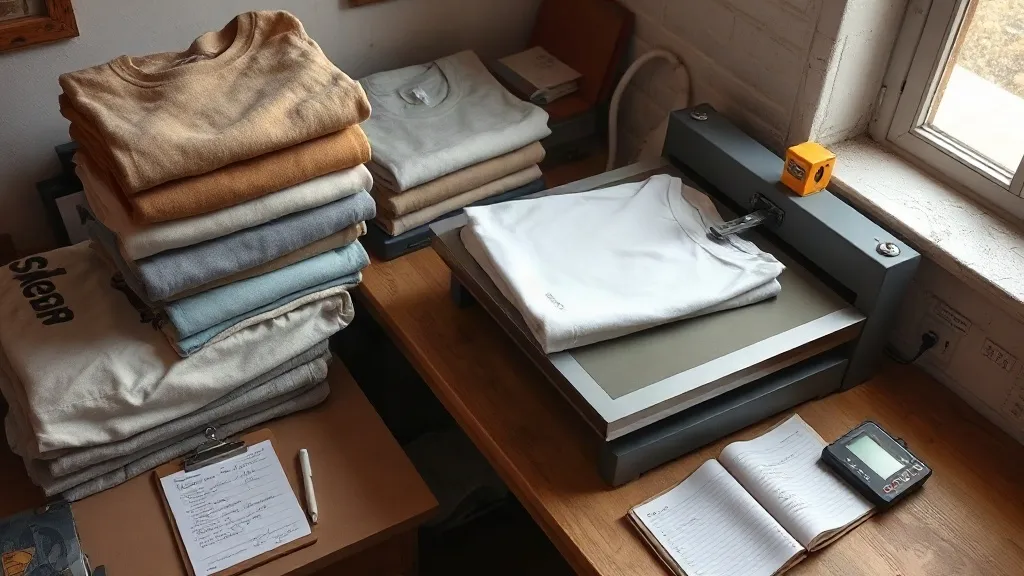
Every print shop owner has done the same thing at least once: compared two blank tees side by side, looked at the unit price, and picked the cheaper one. Three months later, the complaints came in. Cracked prints, thin fabric that showed every wrinkle, collars that rolled after two washes. The cheap shirt was never cheap. It just pushed the cost somewhere else, usually onto your reputation.
That is the argument for thinking about shaka wear differently than most buying guides do. Instead of asking whether the blanks are good (they are), ask a harder question: what does each shirt actually cost once you factor in reprints, returns, wash durability, and how many times the customer will realistically wear it? That number, cost per wear, is where heavyweight blanks either pay for themselves or quietly drain a shop's margin.
Why Unit Price Is the Wrong Starting Point
A blank tee has at least four costs baked into it, and only one of them shows up on the invoice. There is the garment itself, the DTF film and powder you consume, the labor minutes to press it, and the failure cost when a print does not survive its first wash cycle. Most shops track the first one closely and estimate the other three by feel.
That works until volume picks up. Once you are pressing fifty or a hundred pieces a week, small failure rates turn into real money. A five percent reprint rate on a cheap blank can erase the savings from buying it in the first place, especially if the customer has already posted the shirt on social media before it fell apart.
Cost per wear flips the calculation. You divide the total cost of producing and delivering the garment by the number of washes it survives while still looking sellable. A shirt that costs more up front but holds its shape and print through forty washes usually wins that math by a wide margin.
What Heavyweight Blanks Actually Change
Fabric weight is measured in ounces per square yard, and it drives almost everything a customer notices. A 5.3 oz tee feels light and drapes loosely. A 7 oz or heavier garment has structure, holds its shape on the hanger, and resists the kind of stretching that distorts a print over time.
Heavier cotton also handles heat differently. When you press a DTF transfer, the fabric needs to absorb and distribute heat evenly under the platen. Thin, loosely knit jersey can shift or thin out under pressure, which shows up later as a print that looks slightly sunken or wavy at the edges. Dense, heavier knits give the adhesive a more stable surface to bond to.
The trade-off nobody mentions
Heavyweight does not automatically mean easier. Thicker garments take longer to pre-press, hold moisture differently during curing, and can feel stiff if you over-press them. The first time you run a new heavyweight blank, press a test piece and check the hand feel after it cools completely. Warm fabric always feels softer than it will at room temperature.
Where DTF Prints Fail on Cheap Blanks
Most DTF failures are not film problems or powder problems. They are substrate problems. Here are the patterns that show up again and again in shops that switch between blank suppliers.
- Edge lift after washing: usually caused by fabric that shrinks unevenly, pulling the cured adhesive away from the surface.
- Faded or dull color: often a sign that the fabric surface is too textured for the ink layer to sit flat, so light scatters instead of reflecting cleanly.
- Cracking along fold lines: happens when a stiff print is applied to a soft, stretchy knit that flexes more than the cured ink can handle.
- Ghosting or double edges: frequently a repress issue on fabric that shifted during the initial application.
None of these are guaranteed to disappear just by buying a better blank, but a denser, more consistent knit removes the most common trigger. That is the practical case for Shaka Wear as a production blank rather than a premium upsell.
Building a Real Cost-per-Wear Calculation
You do not need a spreadsheet wizard to run this. A simple per-shirt model is enough to make better buying decisions.
- Add the blank cost, the film and powder cost, and your labor cost per press.
- Estimate your reprint rate on that blank from past orders, even roughly.
- Multiply the total by a factor that accounts for reprints, for example 1.05 for a five percent failure rate.
- Divide by the average number of washes the garment stays presentable.
Run that on two blanks and the gap is often larger than the sticker price difference suggests. A shirt that lasts twice as long at a modestly higher cost is the better business decision every time, particularly for team orders, event merch, and anything a customer will wear weekly.
Matching Gangsheet Layout to Blank Size Runs
Blank choice and gangsheet planning are connected in ways that are easy to miss. If you are printing a mixed size run, the artwork placement has to account for how each size sits on the platen, and heavier garments need slightly more attention to centering because they do not drape as flat.
This is where a tool like the DTF Gangsheet Builder earns its keep. Instead of guessing at spacing, you lay out the full sheet with consistent gaps, which reduces film waste and keeps press time predictable. On a heavyweight blank where each press cycle takes a little longer, wasted film and wasted minutes compound quickly.
A few layout habits that pay off:
- Group sizes so the platen setup changes as few times as possible per run.
- Leave consistent margins so trimming is fast and accurate.
- Nest small logos into leftover space rather than starting a fresh sheet.
- Keep a standard gap width so your press operator does not have to re-measure every transfer.
Pre-Press and Curing on Heavier Cotton
Heavyweight fabric holds moisture longer than thin jersey. If a shirt has been sitting in a humid stockroom, a quick pre-press releases steam that can interfere with adhesion. Give dense blanks a slightly longer pre-press and let them settle before applying the transfer.
Curing is the other half. Powder that is under-cured will shed in the wash; over-cured powder gets brittle and cracks along folds. On thick fabric, the heat has more material to travel through, so do not assume the same dwell time that worked on a light tee will work here. Test, check the stretch, and adjust.
Peel temperature matters more than people think
Hot peel and cold peel films behave differently, and the fabric underneath changes how evenly the transfer cools. On a dense knit, a cold peel often gives cleaner edges because the adhesive has fully set before you pull the carrier away. Try both on a scrap piece and compare the border quality under good light.
When Shaka Wear Makes Sense and When It Does Not
Not every job needs a heavyweight blank. Promotional giveaways with tight budgets, one-time event shirts, and sample runs may not justify the higher unit cost. Where Shaka Wear blanks consistently make sense is in orders where the garment is the product: streetwear drops, team uniforms worn weekly, staff apparel that has to survive industrial washing, and any custom job where a reprint would embarrass the customer.
The honest framing is this. Buy the blank that matches how the shirt will be used, not the one that looks best on the invoice. A cheap tee that fails in the wash costs more than a good one that does not, and the damage is not only financial.
Frequently Asked Questions
Is Shaka Wear good for DTF printing?
Yes, particularly the heavier cotton styles. The denser knit gives the adhesive a stable surface, which reduces edge lift and cracking compared to thin, loosely knit blanks. Results still depend on your press settings, powder curing, and wash testing, so always run a test piece before a full production run.
How many washes should a DTF print on a heavyweight blank survive?
A properly applied and cured transfer on a quality heavyweight blank should stay presentable well beyond twenty washes when washed inside out in cold water and dried on low heat. Hot water, high dryer heat, and fabric softener all shorten print life regardless of blank quality.
Do I need a different press setting for heavier blanks?
Usually yes. Dense fabric needs a longer pre-press to release moisture and may need a slightly adjusted dwell time so heat penetrates evenly. Start with your standard settings, then check adhesion and hand feel after the shirt cools completely before committing to a full run.
Can I mix Shaka Wear sizes on one gangsheet?
You can, and many shops do. The key is planning placement per size so artwork lands consistently across the chest, and keeping gap widths standard so trimming stays quick. A gangsheet layout tool helps here by letting you build the full sheet before printing rather than adjusting on the fly.
Is cost per wear actually useful for a small print shop?
It is most useful for shops doing repeat business. Even a rough estimate forces you to account for reprints and customer lifetime value instead of just the unit price. For one-off jobs the difference is small, but for recurring clients it directly affects how much margin you keep.